

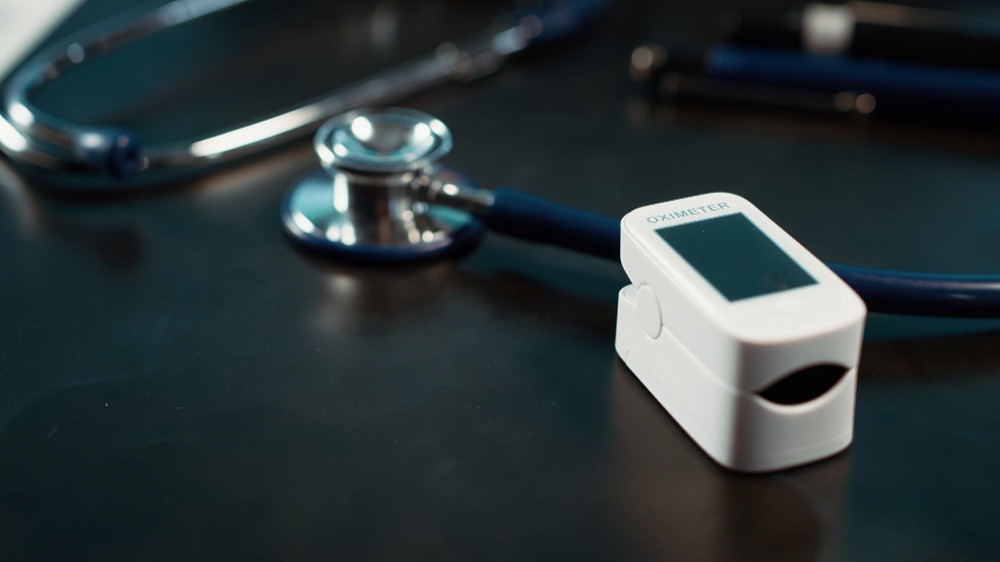

Swing the doors of any hospital ward or GP clinic in the UK or Ireland, and you will find one of the instruments that are being used daily: the stethoscope. Even with the improvement in imaging and digital diagnostics, it is still a first-line tool in determining the health of the patient.
But here is the real question that many professionals will silently ask:
Is there a relationship between stethoscope quality and diagnosis? Or is it simply a matter of the clinician using it?
We can deconstruct what clinical experience and real-world healthcare professionals can teach us.
Is there an Effect of Stethoscope Quality on Diagnosis Accuracy?
The fact is subtle but significant.
A good stethoscope can make a big difference in the quality of sounds that you hear. This encompasses such subtle yet important signs as:
- Faint heart murmurs
- Early-stage lung crackles
- Minor breathing patterns abnormalities.
Conversely, low-quality stethoscopes might dampen or distort these sounds and thus early detection becomes hard.
Nevertheless, diagnosis is not based on equipment only.
Much role is played by clinical expertise, history of the patient, and follow-up tests.
It is best to say that although a better stethoscope does not automatically transform a clinician into a better one, it will improve their chances of hearing what is important, particularly in borderline or early cases.
What Healthcare Professionals Say
In NHS hospitals, private practice and care homes, there is one unanimous view:
Good tools make a difference, but first comes skill.
Most seasoned clinicians indicate that they can use any stethoscope. However, they will choose a better-quality model to use on a daily basis when they get a choice.
Why?
Because they offer:
- Sharper acoustic performance
- Better distinction between sound frequencies
- Reduced background interference
In a busy ward or an emergency where there is so much noise, this can be the difference between hearing a particular thing clearly and not hearing it at all.
Better equipment is advantageous to younger clinicians and trainees, in general, as they build up their diagnostic abilities.
The reason why the Quality of Stethoscopes remains important in the contemporary healthcare industry
Having the possibility of such sophisticated diagnostics as ultrasounds and imaging, one may wonder whether the quality of stethoscopes matters anymore.
The response is yes definitely at the first evaluation level.
Early Diagnosis Can Alter Destiny
The stethoscope is the initial source of clinical enlightenment in most instances.
A more sensitive, clearer device assists in identifying:
- Respiratory infections at an early stage
- Before they become serious, cardiac irregularities.
- Alteration of patient state during regular check-ups.
Identification of these signs in their early stages can result in prompt intervention and improved patient outcomes.
Trust in Clinical Decision-Making
Clinicians are also more sure of their actions when they have a clear definition of what is happening internally.
This influences such decisions as:
- Referral of a patient.
- Ordering additional tests
- Starting immediate treatment
Confidence and speed are important in the high-pressure healthcare facilities in Ireland and the UK.
Real-World Working Conditions
Being real, clinical environments are not silent.
Background noise is present everywhere, whether at the busy hospital corridors or at the care home settings.
Better-quality stethoscopes are made to accommodate this by providing:
- Enhanced sound isolation
- Stronger acoustic transmission
- Better sense of chest pieces.
This renders them much more dependable in its daily application.
Where Even the best stethoscope is not enough
One should remain grounded in expectations.
No most sophisticated stethoscope will ever be able to substitute:
- Imaging technologies
- Laboratory testing
- Specialist diagnostics
As an illustration, the identification of complicated cardiac disorders may need echocardiograms and not only the use of the stethoscope.
This brings out a critical observation:
A stethoscope is not a diagnostic answer but a screening tool.
It is not to take the place of the clinician, but to direct it.
Which Stethoscope to Buy: It Does Matter
In the light of quality, then the selection of the appropriate stethoscope becomes imperative particularly to health care providers and procurement teams.
The following are the areas to focus on:
Acoustic Clarity
Find models that are characterized by:
- Upon detection of high-frequency and low-frequency sounds.
- Minimal distortion
This has a direct effect on what you will hear, and what you may not.
Build Quality & Durability
Equipment is in constant utilization in busy UK and Irish healthcare settings.
A long-lasting stethoscope guarantees:
- Long-term performance
- Reduced replacement costs
- Regularity of everyday application.
Comfort & Fit
An ill-fitting stethoscope will:
- Reduce sound quality
- Painful when working long shifts.
The role of ergonomic design is larger than one might think.
Hygiene & Infection Control
After the pandemic, the control of the infection has never been so important.
The following are some of the priorities of many healthcare facilities:
- Easy-to-clean materials
- Dedicated patient-use stethoscopes
Finally, the purchase of a good, high-quality stethoscope such as 3M Littmann Stethoscopes enables clinicians to work faster, more efficiently and more accurately to aid in improved patient care on a daily basis.
The Reason to Select an Appropriate Supplier
In addition to the product itself, it is also important to source a trusted supplier.
Medical professionals must be consistent, reliable, and quality adherent.
This is the reason why most organisations in Ireland are resorting to Medguard Healthcare, which is a reliable provider of various medical equipment to support the needs of the contemporary clinical setting. Availability of reliable tools means that clinicians can devote their time to the aspects of patient care that are really important.
Conclusion
Does the quality of the stethoscopes have any impact on the diagnosis? Yes but it is not the whole story Good sounding stethoscopes enhance sound and detection.It assists in accelerated and more confident clinical decisions.However, it has to be accompanied with competence, experience, and other diagnostics. To the medical staff in the UK and Ireland, it becomes a simple takeaway, Basic investments in quality tools should not impede the journey of continuously building clinical expertise. It is because eventually, it will be the blend of the two that will result in improved patient outcomes.