

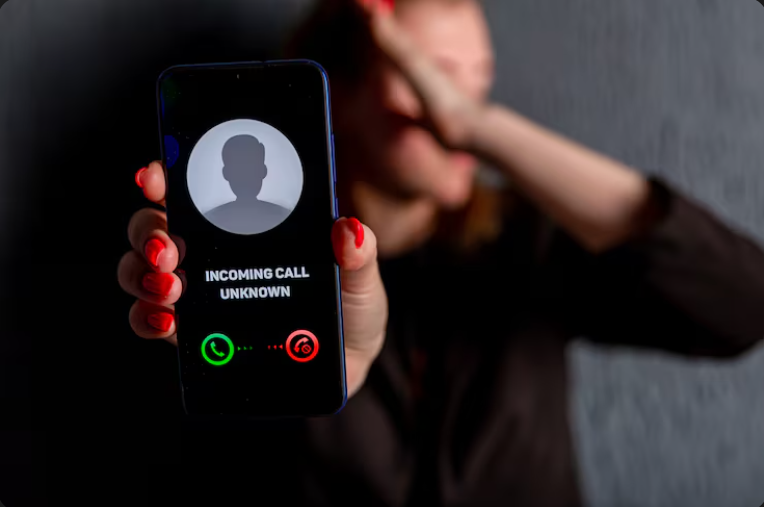

Introduction: The Evolution of Caller Identification in the AI Era
As we navigate through 2026, the telecommunications landscape has shifted dramatically, becoming a complex battleground between privacy advocates, everyday consumers, and sophisticated malicious actors. The most defining change of this era is undeniably the surge of AI-generated spam and deepfake voice calls. It is no longer just a pre-recorded robocall attempting to sell extended auto warranties; today’s fraudulent callers leverage generative artificial intelligence to clone voices, bypass biometric security prompts, and engage in hyper-personalized social engineering attacks.
Because of this rapid technological escalation, traditional Caller ID has become woefully insufficient for modern security needs. In the early 2000s, seeing a name and number flash on a screen was enough to verify trust. Today, however, caller ID spoofing—the practice of masking a true origin number with a familiar or localized fake—has rendered basic identification protocols obsolete. Relying solely on the name displayed on your smartphone is now a documented security risk.
Simultaneously, we have witnessed a massive cultural shift in consumer expectations regarding digital transparency and privacy. People are demanding the right to know exactly who is trying to access their time and attention, while fiercely guarding their own personal data. This dual demand for transparency on the inbound side and privacy on the outbound side has created a complex web of modern communication standards. Identifying an unknown caller is no longer just a matter of curiosity; in 2026, it is a crucial act of personal cybersecurity.
Navigating the 2026 Legal Landscape of Digital Privacy
Before embarking on any digital investigation, it is imperative to understand the strict legal boundaries that govern data access in 2026. Over the past few years, international and domestic privacy frameworks have evolved significantly to protect consumers from unwarranted surveillance and data brokering.
Understanding the Federal Communications Privacy Act (FCPA) Updates
How ‘Right to be Forgotten’ Laws Impact Lookup Databases
Another major legal pillar to understand is the global expansion of Right to be Forgotten legislation. Originally popularized in the European Union, these laws now deeply impact public and private lookup databases worldwide. Individuals have the legal right to scrub their phone numbers and associated data from commercial directories. Consequently, a “no result found” during a caller identification search does not necessarily indicate a scammer; it may simply represent a privacy-conscious citizen who has exercised their legal right to digital erasure.
Public Record Access vs. Unauthorized Data Mining
The legal distinction between public record access and unauthorized data mining is sharper than ever. Public record access involves querying established, regulated databases (such as licensed business registries or publicly indexed directories). Unauthorized data mining, however, involves deploying scraping tools to aggregate protected social media data or breaching encrypted networks to unmask a caller. Crossing this line can result in severe civil penalties. Therefore, utilizing legally compliant lookup methodologies is the only safe way forward.
Methodology: A Step-by-Step Guide to Legal Phone Lookup
To safely and effectively identify an unknown caller, you must employ a systematic approach. Here is the definitive, legally compliant methodology for 2026:
Step 1: Utilizing Carrier-Integrated Verification Tools for Initial Screening
Before using any third-party tools, consult your smartphone’s native, carrier-integrated features.
- Action: Check your recent calls log for carrier-issued digital watermarks (often displayed as a green checkmark or a “Verified Caller” badge).
- Why: Major telecom providers now embed cryptographic signatures into authentic calls. If an unknown number lacks this basic carrier verification, treat it with immediate suspicion.
- Next Step: If the number is unverified, use your phone’s built-in “Report/Block” feature to query the carrier’s real-time threat database.
Step 2: Leveraging AI-Driven Reverse Lookup Platforms
If carrier tools yield no results, transition to a compliant reverse phone lookup platform.
- Action: Input the number into a highly-rated, FCPA-compliant reverse lookup service (e.g., TrueCaller Pro 2026, verified OSINT databases).
- Validation: Ensure the platform prominently displays its privacy compliance certifications. These platforms use AI to synthesize data across millions of opt-in records and business directories.
- Result Analysis: Look for consistency. If the tool identifies the number as belonging to “Acme Corp” but user-submitted tags label it “Robocall Scam,” trust the community consensus.
Step 3: Performing a Manual ‘Digital Footprint’ Analysis
Sometimes, automated tools fall short due to “Right to be Forgotten” enactments. In these cases, a manual approach is required.
- Action: Enter the phone number into major search engines using strict Boolean search operators (e.g., `”123-456-7890″` OR `”(123) 456-7890″`).
- Focus Areas: Check professional networks and localized business directories. Many legitimate individuals and businesses embed their contact info in digital resumes, public portfolios, or digital storefronts that aren’t swept up by basic lookup apps.
Step 4: Cross-Referencing Results with Authorized Consumer Protection Databases
To finalize your investigation and ensure you aren’t dealing with a known threat actor, verify your findings against government and consumer protection watchlists.
- Action: Search the number in databases like the Federal Trade Commission’s (FTC) National Do Not Call Registry scam reports or the Better Business Bureau (BBB) Scam Tracker.
- Closure: If the number appears on these authorized public warning lists, immediately block the caller at the device level and report the interaction to aid national cybersecurity efforts.
Essential Tools and Technologies for Modern Identity Verification
The arsenal available to consumers in 2026 has expanded far beyond simple web searches. Modern caller identification relies on a sophisticated blend of artificial intelligence and decentralized technology.
Top-Rated AI-Powered Lookup Apps with Real-Time Reputation Scoring
Blockchain-Verified Caller Identity Frameworks
One of the most revolutionary breakthroughs in 2026 is the adoption of blockchain-verified caller identity frameworks. By utilizing decentralized ledgers, businesses can register their outbound calling numbers on an immutable blockchain. When that business calls you, your device queries the blockchain to confirm the caller’s cryptographic keys. This mathematical proof makes traditional number spoofing virtually impossible for verified corporate entities.
The Emergence of ‘Trust Scores’ in Communication
Much like a credit score dictates financial reliability, Communication Trust Scores are becoming the norm for personal and professional networking. Individuals can opt-in to verified communication ecosystems, proving their identity via multi-factor authentication (MFA) to earn a high Trust Score. When an unknown but highly-scored number calls, you can answer with confidence knowing the caller’s identity has been vetted by an independent digital authority.
The Strategic Use of Search Engines and Social Media
When proprietary apps and carrier tools fail, search engines and social media platforms remain powerful, albeit legally nuanced, tools for caller identification.
Advanced Search Operators for Identifying Business-Linked Numbers
Mastering advanced search operators is a crucial skill. Because many scammers use temporary VoIP numbers linked to shell businesses, targeting localized searches can unmask them. Try searching the phone number alongside keywords like `”scam”`, `”who called”`, or `”complaint”`. Furthermore, using the `site:` operator to search specific public record domains (e.g., `site:gov “phone number”`) can reveal if the number is tied to official government documentation or public court records.
Extracting Information from Encrypted Professional Networks
In 2026, professional networking sites have heavily encrypted their user databases to comply with global privacy laws. You can no longer indiscriminately scrape these platforms. However, if you are logged into your own verified professional account, utilizing the platform’s internal search bar to query a phone number can legally match you with a public profile, provided the user has explicitly authorized their number to be searchable by logged-in members.
Navigating the Limited Visibility of Private Profiles
It is crucial to acknowledge the limited visibility of private profiles in 2026 search indexes. Search engines routinely de-index personal phone numbers to prevent doxxing and harassment. If your search yields absolutely zero results, respect the digital boundary; the number probably belongs to a private citizen enforcing their strict privacy settings, rather than a malicious actor.
How Telecom Carriers are Combatting Number Spoofing
The burden of identifying callers does not rest solely on the consumer. Telecom carriers have deployed unprecedented, network-level defenses to eradicate malicious spoofing before the call reaches your device.
The Evolution of STIR/SHAKEN Protocols
Carrier-Grade ‘Scam Shield’ Features and Automated Blocking
Major networks have integrated carrier-grade Scam Shield features directly into their infrastructure. Utilizing advanced predictive algorithms, these networks analyze call routing behaviors, audio latency, and origin metadata. If an inbound call matches the behavioral fingerprint of a robotic auto-dialer or an AI voice cloning server, the carrier’s automated blocking algorithms will silently terminate the call, sparing the consumer entirely.
The Role of the 2026 National Spoofing Task Force
To coordinate these massive efforts, the recently established 2026 National Spoofing Task Force brings together federal regulators, private cybersecurity firms, and leading telecom engineers. This public-private partnership shares real-time threat intelligence regarding new spoofing vectors. When a new scam methodology is identified, the Task Force issues immediate patches and updates to the national STIR/SHAKEN infrastructure, creating a dynamic, self-healing communication grid.
Protecting Your Data Privacy While Performing Lookups
While investigating others, you must remain vigilant about protecting your own digital footprint. The act of searching for an unknown caller can inadvertently expose your own data if done carelessly.
Identifying and Avoiding Predatory Lookup Sites
The internet is rife with predatory lookup sites that exist solely to harvest user data. These platforms often lure users in with promises of “100% Free Reverse Lookups.” In reality, the moment you input a number or create an account, these sites harvest your IP address, device metadata, and personal contacts to sell to third-party data brokers. Always verify a site’s privacy policy and look for independent security audits before engaging. If a service demands access to your phone’s contact list in exchange for a lookup, decline and uninstall it immediately.
The Importance of Using Secure, Encrypted Connections
When conducting digital investigations, always use secure, encrypted connections. Utilizing a reputable Virtual Private Network (VPN) masks your IP address and encrypts your search traffic. This prevents localized network eavesdroppers and the search platforms themselves from building a shadow profile based on your query history.
Managing Your Own Digital Presence
To prevent reciprocal lookup abuse—where a scammer tries to investigate *you* after you investigate *them*—you must proactively manage your digital presence. Regularly audit your social media privacy settings, utilize secondary “burner” numbers for online registrations, and submit opt-out requests to major data aggregators. By shrinking your own digital footprint, you neutralize the leverage that malicious callers might hold over you.
Conclusion: The Future of Secure and Transparent Communication
Identifying an unknown caller in 2026 is a multifaceted process that requires a blend of technological savvy, legal awareness, and digital caution. From leveraging carrier-integrated verifications and AI-driven lookup tools to relying on the robust, network-level security of modern call authentication protocols, consumers have more power than ever to unmask the individuals trying to reach them.
However, this is an ongoing battle between privacy rights and the need for transparency. As AI continues to evolve and deepfake technologies become more accessible, the tactics used by malicious actors will undoubtedly grow more sophisticated. Similarly, as privacy laws become more stringent, legally accessing identifying information will require increasingly complex, opt-in frameworks.
Our final recommendations are simple but vital: Trust your carrier’s built-in verification tools, utilize only legally compliant and audited reverse-lookup services, and never surrender your own data in the pursuit of unmasking a caller. By staying informed, utilizing the methodology outlined in this guide, and practicing vigilant digital hygiene, you can safely navigate the increasingly connected, yet deeply complex, world of 2026 telecommunications.