

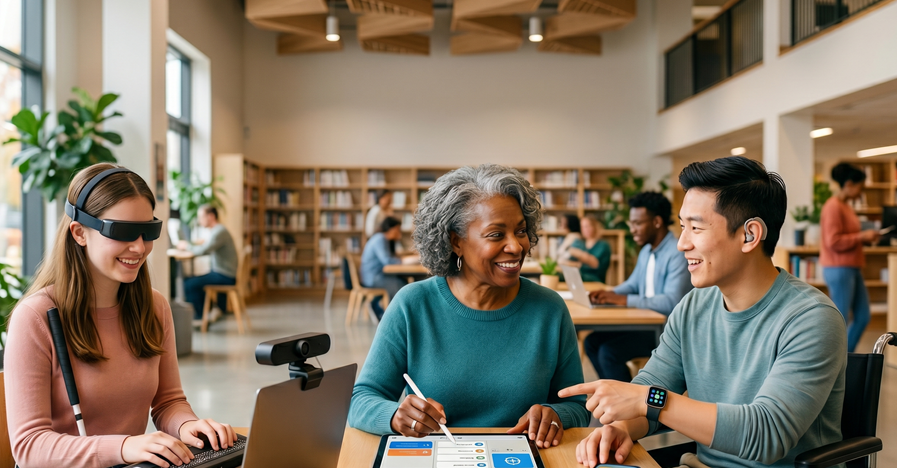

In a world increasingly driven by technological innovation, the true measure of progress lies in how effectively we leverage these advancements to empower every member of society. Assistive technology serves as the vital bridge connecting individuals with disabilities to a world of previously inaccessible opportunities. From physical mobility aids to sophisticated digital software, these tools are fundamentally reshaping the way we live, learn, and work. This comprehensive guide explores the evolution, categories, impacts, and future of assistive solutions, highlighting why accessibility must remain a priority in our modern world.
Understanding Assistive Technology: Definitions and Core Concepts
To fully grasp the profound impact of these innovations, we must first define what they are and how they have evolved over human history.
Defining Assistive Technology (AT)
At its core, Assistive Technology (AT) encompasses any device, piece of equipment, software program, or product system that is used to increase, maintain, or improve the functional capabilities of persons with disabilities. This broad definition ranges from simple “low-tech” solutions like magnifying glasses and specialized pencil grips to “high-tech” marvels like voice-activated smart home systems and custom-engineered bionic prosthetics.
The Historical Evolution of AT
The journey of assistive tools is a testament to human ingenuity. Historically, assistive solutions began with basic physical adaptations—such as rudimentary wooden peg legs, crutches, and mechanical ear trumpets designed to amplify sound. As the industrial and digital revolutions took hold, so did the complexity of AT. The transition from heavy, mechanical wheeling chairs to lightweight, battery-operated power wheelchairs mirrors the leap from heavy Braille typewriters to refreshable Braille displays and synthesized voice software.
Assistive, Adaptive, and Rehabilitative Technology
While often used interchangeably, it is crucial to distinguish between these three pillars of technological support:
- Assistive Technology: Broadly covers tools that help a person complete a task they might otherwise be unable to do.
- Adaptive Technology: A subcategory of AT specifically tailored or modified for people with disabilities (e.g., modified driving controls in a vehicle).
- Rehabilitative Technology: Devices focused on restoring a patient’s function following an illness or injury, typically used within clinical therapy settings rather than for permanent, everyday assistance.
The Role of the World Health Organization
The World Health Organization (WHO) plays a pivotal role in standardizing and championing accessibility. The WHO estimates that over 2.5 billion people globally require one or more assistive products, a number projected to grow beyond 3.5 billion by 2050 due to an aging population and rising prevalence of noncommunicable diseases. Through global initiatives, the WHO works to define international accessibility standards, ensuring that life-changing devices are prioritized in health systems worldwide.
Categorizing Assistive Technology by Functional Need
Because the spectrum of human ability is vastly diverse, AT is generally categorized by the specific functional needs it addresses.
Vision Aids
For individuals with partial or total vision loss, technology provides alternative pathways to visual information. Screen readers (like JAWS or NVDA) translate on-screen text into synthesized speech. Braille displays connect to computers to provide tactile translations of digital text. Furthermore, magnification software and high-contrast display settings allow those with low vision to seamlessly navigate operating systems and websites.
Hearing Assistance
The landscape of hearing support has expanded far beyond traditional hearing aids. Today, cochlear implants surgically bypass damaged portions of the ear to directly stimulate the auditory nerve. For situational support, real-time captioning tools powered by AI can instantly transcribe spoken words during meetings, lectures, and live events, ensuring that the deaf and hard-of-hearing community has immediate access to spoken communication.
Mobility and Physical Support
Physical disabilities and motor impairments are addressed through a wide array of mobility tools. Power wheelchairs and mobility scooters offer independence in navigation. In the digital realm, specialized keyboards, eye-tracking software, and sip-and-puff systems allow users with severe motor limitations to type, browse the web, and operate complex machinery. Emerging technologies like robotic exoskeletons are even allowing individuals with spinal cord injuries to stand and walk.
Cognitive Support
Neurodivergent individuals and those with cognitive impairments—such as Alzheimer’s, traumatic brain injuries, or ADHD—benefit immensely from cognitive AT. Memory aids, automated reminders, and task-sequencing apps help manage daily routines. Furthermore, simplified user interfaces and organizational software are crucial in preventing cognitive overload, creating a more manageable digital environment.
Assistive Technology in the Educational Sector
Education is a fundamental right, and AT is the great equalizer in the modern classroom.
Promoting Inclusive Education Through UDL
Universal Design for Learning (UDL) is an educational framework that guides the development of flexible learning environments and workspaces that can accommodate individual learning differences. Rather than retrofitting a lesson for a student with a disability, UDL suggests designing the curriculum with accessibility built in from the ground up, utilizing various AT tools to present information in multiple ways.
Tools for Dyslexia and Learning Disabilities
Students with learning disabilities, such as dyslexia or dysgraphia, rely heavily on digital accommodations. Text-to-speech (TTS) software reads digital content aloud, allowing students to comprehend complex texts without struggling with decoding words. Conversely, speech-to-text (dictation) applications allow students to verbalize their thoughts and bypass the physical and cognitive hurdles of writing and spelling.
Academic Performance and K-12/Higher Ed Impact
The introduction of AT in both K-12 and Higher Education has dramatically improved student engagement and academic performance. When students are given the specific tools they need to bypass their barriers, they can focus entirely on concept comprehension and creative expression, reducing frustration and decreasing dropout rates.
Legal Mandates and IDEA
In the United States, the Individuals with Disabilities Education Act (IDEA) mandates that public schools provide eligible children with disabilities a free appropriate public education (FAPE). A critical component of this legal mandate is the assessment and provision of necessary assistive technology devices and services, ensuring that cost is not a barrier to a child’s educational access.
Creating Inclusive Workplaces with AT
The transition from education to employment is a critical phase, and an accessible workplace is essential for fostering a diverse, innovative workforce.
Ergonomic Hardware and Adaptive Input Devices
A standard office setup is not universally functional. Ergonomic hardware—such as trackball mice, split keyboards, and height-adjustable standing desks—prevents repetitive strain injuries and accommodates physical disabilities. Adaptive input devices, like foot-operated pedals or head-wands, ensure that computer-based tasks are accessible to everyone.
The ROI of Accessibility
Investing in workplace AT is not merely a philanthropic endeavor; it is a strategic business decision. The ROI of accessibility is proven through higher employee retention rates, reduced absenteeism, and significant boosts in overall productivity. When employees are comfortable and fully equipped to perform their duties, business operations thrive.
Navigating the ADA
The Americans with Disabilities Act (ADA) is a landmark civil rights law that prohibits discrimination based on disability. Title I of the ADA specifically requires employers to provide “reasonable accommodations” to qualified applicants and employees. Providing assistive software, modifying workspaces, and offering flexible schedules are primary ways companies remain compliant and supportive.
Remote Work and Digital Accessibility
The global shift toward remote work has accelerated the adoption of digital accessibility tools in professional settings. Video conferencing platforms now integrate automated live-captions, screen reader compatibility is prioritized in project management software, and asynchronous communication tools allow neurodivergent employees to process information at their own pace.
Enhancing Daily Living and Personal Independence
Beyond the classroom and the office, assistive technology profoundly transforms everyday living and domestic independence.
Smart Home Integration
The rise of the smart home has revolutionized independence for individuals with mobility or vision impairments. Voice-activated assistants (like Amazon Alexa or Google Assistant) allow users to control automated lighting systems, adjust thermostats, lock doors, and make phone calls entirely hands-free.
Wearable Technology and Health Monitoring
Wearable technology now includes features specifically designed for safety and health monitoring. Smartwatches with built-in fall detection can automatically contact emergency services if a user is unresponsive. GPS-enabled wearables assist individuals with cognitive impairments or dementia in environmental navigation, preventing them from becoming lost.
Adaptive Kitchenware and Aging-in-Place
For the aging population, AT enables “aging-in-place”—the ability to live safely and comfortably in one’s own home, regardless of age or ability. Adaptive kitchenware, such as self-stabilizing spoons for Parkinson’s patients or talking microwaves for the visually impaired, empowers individuals to maintain their personal care and daily routines without relying on caretakers.
The Intersection of IoT and Assistive Ecosystems
The Internet of Things (IoT) connects discrete devices into a cohesive, responsive ecosystem. For someone with a disability, an IoT-enabled home means their medical alert bracelet communicates with their smart door locks to let paramedics inside, or their bed sensors communicate with automated lighting to illuminate the path to the bathroom at night.
The Social and Psychological Impact of Accessibility
While the functional benefits of AT are easy to quantify, the social and psychological benefits are equally profound.
Reducing the Digital Divide
Access to technology dictates access to society. By providing robust assistive tools, we reduce the digital divide, ensuring that people with disabilities are not left behind in an increasingly digitized economy, political landscape, and social sphere.
Mental Well-being, Confidence, and Self-Reliance
There is a direct link between the use of AT and positive mental well-being. The ability to independently navigate a city, read a book, or communicate with a loved one builds profound confidence and self-reliance. It shifts the narrative from dependence to autonomy.
Overcoming Stigma
Historically, assistive devices were clunky and carried a heavy social stigma. Today, the sleek, integrated design of modern AT—such as hearing aids that resemble high-end wireless earbuds—helps overcome the stigma associated with device use and normalizes accessibility in public spaces.
Community Building
Accessible communication platforms, augmented by text-to-speech and specialized interfaces, allow individuals with severe disabilities to participate in online forums, social media, and virtual communities. This fosters social inclusion and prevents the profound isolation that historically affected disabled populations.
Emerging Trends and the Future of AT
The pace of innovation in assistive technology is accelerating exponentially, promising a future where physical and cognitive barriers are dramatically minimized.
AI and Machine Learning Integration
Artificial Intelligence and Machine Learning are revolutionizing predictive text, making communication vastly faster for individuals using augmentative and alternative communication (AAC) devices. Furthermore, AI-powered computer vision apps can currently identify objects, read physical documents, and describe scenes aloud to blind users in real time.
Neural Interfaces and Brain-Computer Interaction
Perhaps the most groundbreaking frontier is the Brain–computer interface (BCI). By capturing brain waves and translating them into computer commands, neural interfaces are allowing individuals with complete paralysis (such as locked-in syndrome) to type, browse the internet, and control robotic limbs using nothing but their thoughts.
Democratization Through 3D Printing
Historically, custom assistive devices were prohibitively expensive. The democratization of AT is being driven by 3D printing and open-source hardware. Today, communities of makers and engineers design and 3D-print highly customized, affordable prosthetic hands, wheelchair modifications, and ergonomic grips, sharing the blueprints online for anyone to use.
The Next Decade of Bionics and Robotics
Looking toward the next decade, the fusion of bionics, robotics, and biology will yield prosthetics that not only move fluidly but possess a sense of touch. AI-driven robotic assistants will become commonplace in eldercare facilities, providing physical lifting support and social engagement.
Conclusion: The Path Toward Universal Accessibility
Assistive technology is far more than a collection of gadgets and software; it is a profound enabler of human potential. By mitigating the barriers created by physical and cognitive impairments, these tools grant individuals the autonomy to pursue education, build fulfilling careers, and navigate the world on their own terms.
However, the transformative power of Assistive Technology can only be fully realized if it is accessible to all. The ongoing need for policy advocacy, affordable access, and inclusive design is critical. We must continue to push governments and tech innovators to prioritize affordability and global distribution. Ultimately, accessibility must be viewed not as a luxury or an afterthought, but as a fundamental human right. By continuing to innovate and break down barriers, we step closer to a world of true, universal accessibility.
Frequently Asked Questions (FAQs)
What is the difference between Assistive Technology and Universal Design?
Assistive technology refers to specific devices or software used by an individual to overcome a barrier (e.g., a screen reader). Universal Design is a broader concept that involves designing products, buildings, or environments to be inherently accessible to as many people as possible, reducing the need for specialized assistive tools.
Are assistive technologies expensive?
The cost varies wildly. While highly specialized tools like power wheelchairs and brain-computer interfaces can be very expensive, many digital assistive technologies—such as basic text-to-speech, magnification, and closed captioning—are now built freely into everyday operating systems like Windows, macOS, iOS, and Android.
How can employers better support the use of Assistive Technology in the workplace?
Employers can support AT by proactively performing accessibility audits on their digital infrastructure, explicitly offering accommodations during the hiring process, educating IT departments on software compatibility, and fostering an open, stigma-free culture where employees feel comfortable requesting the tools they need.