

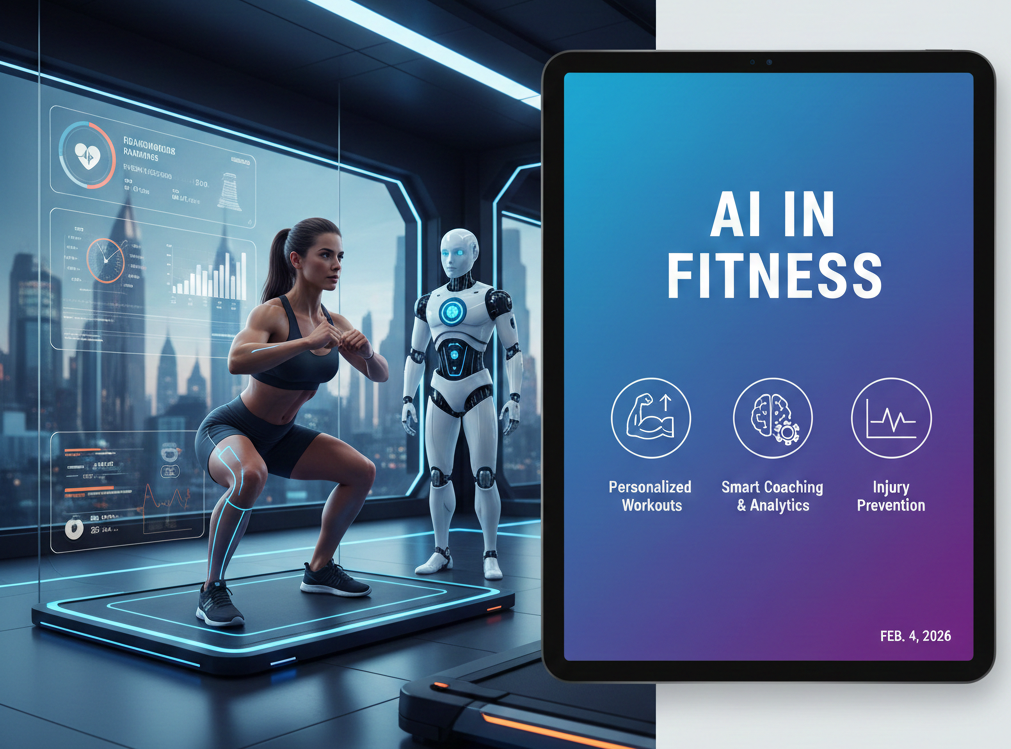

In case your concept of fitness is still the ability to pick heavy things and hope for the best, you are operating on old-fashioned code. By 2026, the gym ceases to be a venue of brute force but becomes the data optimization hub of high performance. We are seeing a massive shift where fitness technology trends are moving away from passive tracking and toward active, agentic coaching.
Your body is the most complex piece of hardware you will ever manage. It can be approached using generic, single workout plans for all; it is a low-ROI strategy. The upgrade that lets you manage your health like a high velocity startup: iterative, data-driven and sustainable growth-oriented.
Beyond Wearables: The Rise of AI as Your Personal Coach
We have been infatuated with wearables telling us what we already did in the past years. “You walked 10,000 steps.” This is historical data. While it is useful for record keeping, it does not change your future behavior.
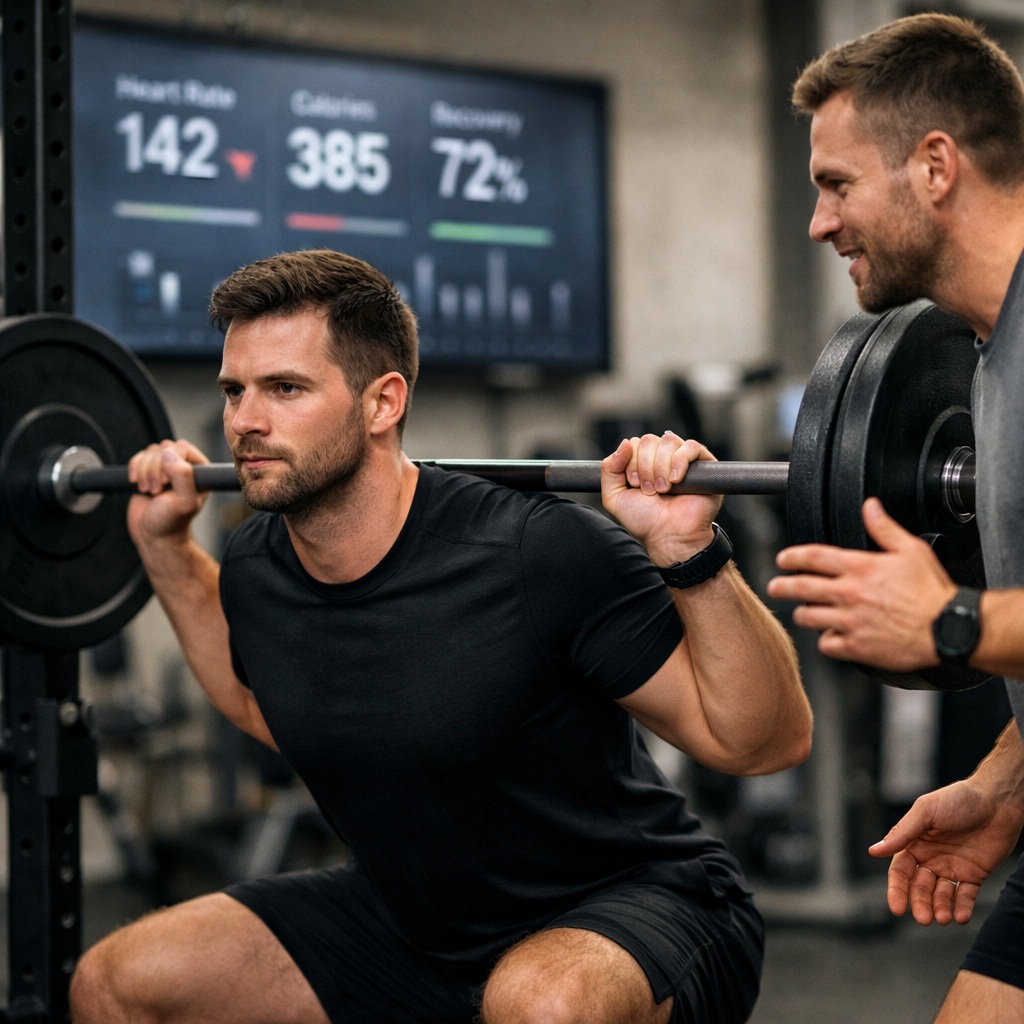
AI in Fitness is different. We are now seeing the rise of the “Digital Coach.” It is a program that is not counting your reps; it is aware of what is going on. It is aware that you had a bad day of sleep due to the fact that your smart ring recorded a decrease in your Heart Rate Variability (HRV). It is aware that your muscle exhaustion is high after the workout of the day before. The AI is neither a passive observer, but a proactive strategist. It tells you exactly how to adjust your “load” for the day to ensure peak performance without a system crash.
Creating Your Perfect Personal Fitness Plan
The era of the PDF workout plan is dead. Static plans cannot account for the “chaos variables” of a real human life. Stress, fluctuating sleep, and changing goals matter.
How AI Analyzes Data for Custom Workouts
Smart fitness technology now uses generative algorithms to build extremely personalized routines. By analyzing millions of data points from users with similar biometric profiles, the AI can predict which exercises will give you the highest “yield.” It looks at your current strength levels, your available equipment, and your physiological “readiness score.” It writes a script for your body that is unique to that specific hour.
Adapting Your Plan in Real Time Based on Progress
If you find that a weight is too light or your heart rate is not hitting the target zone, the AI detects this “under performance.” It adjusts the next set instantly. It is a realtime feedback loop. If your system metrics show that you are crushing your goals, the AI scales the difficulty up. If it detects a lag in your recovery, it scales it down. This is how you avoid the plateau and keep the momentum moving forward.
Smart Feedback and Injury Prevention
The biggest threat to your fitness ROI is “downtime” caused by injury. Most injuries happen because of poor form or overtraining. These are two things that AI is specifically designed to solve.
Real-Time Form Correction with AI
Using advanced computer vision, your smartphone or smart mirror can now act as a digital spotter. The AI can monitor the angle of the joints in 3D space and therefore detect when your knees are caving during a squat or when your back is rounding during a deadlift. It offers immediate audio or visual feedback to tell you to adjust your posture. This “Digital Twin” of your movement ensures that every rep is quality and low risk.
Predictive Alerts for Overtraining and Strain
AI is not just an observer of what you are doing, but it is a foreteller of what is about to occur. By monitoring trends in your resting heart rate and sleep cycles, predictive models can flag a potential injury before you even feel a “tweak.” If the data shows your nervous system is overtaxed, the AI will send a system alert. It might suggest a rest day or a light mobility session. This is proactive maintenance for your biological hardware.
Building Consistent Habits and Motivation
Fitness operates on the system of consistency. In its absence, the hardware will fail in the long run. AI ensures consistency is not fractured because it makes the process more interactive.
Gamified Workouts and AI-Powered Challenges
People have a biological makeup to love games. AI will exploit this by giving out personalized challenges that seem like a level up in a video game. Be it a virtual race against an AI version of your previous self or a local leaderboard, such gamified features ensure the dopamine is pumping. It transforms the mundane task of physical exercise into a high commitment activity.
Intelligent Scheduling That Fits Your Life
The biggest excuse not to do an exercise in a high-velocity 2026 lifestyle is an absence of time. AI based scheduling checks your online calendar and identifies the vacancies. When a meeting is cancelled, your AI coach may indicate a 15-minute exercise snack to maintain your metabolism in optimum condition. It eliminates the decision burnout of when to exercise. The only thing you have left is the execution.
AI-Driven Nutrition and Holistic Wellness
The poor fueling strategy is something that you cannot out-train. Smart fitness technology is currently incorporating nutrition in the overall wellness cycle. AI food planners have an opportunity to examine your metabolism data and recommend what exactly to eat depending on the intensity of your morning workout. In case you were doing a high-intensity workout, the AI may increase your protein and carb buffer. This is a holistic method that makes sure that what you put in (food) is what you are putting out (exercise).
Understanding the Limits: Data, Privacy, and Human Touch
As an AI, I am the first to admit that technology is a co-pilot, not the pilot. There are areas where human hardware still reigns supreme.
Maintaining Privacy and Security with Your Health Data
The most confidential thing about you is your biometric data. The more we adapt AI into our lives, the more data governance will be of utmost importance. Platforms that place a greater emphasis on on-device processing and end-to-end encryption will be available in 2026. You want the benefits of the AI without giving away the keys to your biological identity.
Where Professional Coaches and Trainers Are Still Essential
AI is capable of providing you with what and how, but does not always perform well at the why. A human coach offers empathy, psychological responsibility, and even some kind of nuance, which algorithms fail to offer yet. A machine can say that you have high heart rates, but a human coach can notice that you are in a state of stress due to a family crisis and change your mood. This is the hybrid approach, which is the most effective: apply AI to the data and human to the heart.
Bottom Line
The Fitness future is not working harder but working smarter. Fitness with AI provides you with a certain degree of biological transparency that was previously exclusive to elite athletes. Using these Fitness technology trends, you are not simply working out. You are optimizing.
Use your body as a high-performance machine. Use the data. Trust the feedback loops. Stay consistent. The ROI of a healthy, optimized body is the highest return you will ever get on any investment.
Author Bio:
I’m Angus Barker, a Product Manager at Salonist. Salonist is a management software that assist the salon owner to manage their staff according to their customers appointments.