

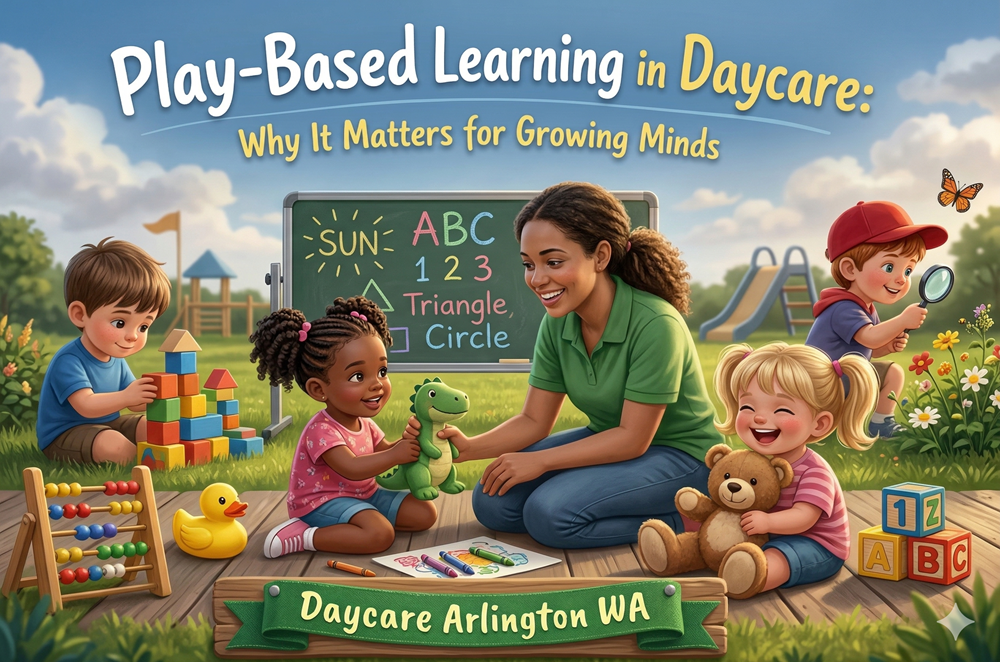

When parents begin searching for the right childcare option, especially when looking for daycare in Arlington WA, they often come across the term “play-based learning.” While it may sound simple, this approach is one of the most powerful ways to support a child’s early development. Play-based learning is not just about fun and games it is a carefully designed method that helps children grow cognitively, socially, emotionally, and physically during their most formative years.
What Is Play-Based Learning?
Play-based learning is an educational approach where play is used as the primary method for teaching. Instead of traditional instruction, children learn through activities that spark curiosity, creativity, and exploration. These activities can include building blocks, pretend play, puzzles, storytelling, music, and outdoor exploration.
In a daycare setting, educators create environments where children can engage in both structured and unstructured play. While it may look like children are simply playing, they are actually developing critical skills that lay the foundation for lifelong learning.
Why Play Is Essential for Early Development
Children are naturally curious. Play allows them to explore the world around them in a way that feels safe and engaging. Through play-based learning, children develop essential skills such as:
- Problem-solving: Figuring out how to build a tower or complete a puzzle
- Language development: Communicating with peers and caregivers
- Social skills: Sharing, taking turns, and collaborating
- Emotional regulation: Understanding feelings and managing them
Research consistently shows that children learn best when they are actively involved and enjoying the process. Play provides that perfect balance between engagement and education.
Cognitive Benefits of Play-Based Learning
One of the biggest advantages of play-based learning is its impact on cognitive development. Activities like sorting shapes, stacking blocks, or engaging in pretend scenarios help children build memory, attention span, and logical thinking.
For example, when a child engages in imaginative play like pretending to run a store, they are practicing decision-making, counting, and communication all at once. These experiences strengthen brain connections and improve their ability to think critically.
Social and Emotional Growth
Daycare environments provide children with their first real opportunities to interact with peers regularly. Through play, children learn how to navigate social situations, express themselves, and understand others.
Play-based learning encourages:
- Cooperation and teamwork
- Empathy and understanding
- Conflict resolution skills
- Confidence and independence
These social-emotional skills are just as important as academic abilities and play a major role in a child’s overall success later in life.
Encouraging Creativity and Imagination
Creativity is a key component of play-based learning. When children are given the freedom to imagine and create, they develop innovative thinking skills that are essential in today’s world.
Activities like drawing, storytelling, role-playing, and building allow children to express themselves in unique ways. This not only enhances creativity but also boosts self-esteem as children take pride in their ideas and creations.
Physical Development Through Play
Play isn’t limited to indoor activities. Outdoor play is a crucial part of play-based learning, helping children develop gross and fine motor skills. Running, jumping, climbing, and even simple activities like holding crayons contribute to physical development.
These activities improve coordination, strength, and overall health while also teaching children the importance of staying active.
Preparing Children for School
One common concern among parents is whether play-based learning adequately prepares children for formal education. The answer is yes—often better than traditional methods.
Through play, children develop foundational skills needed for school, including:
- Early literacy and numeracy
- Focus and attention
- Listening and following instructions
- Curiosity and love for learning
Because these skills are developed naturally and enjoyably, children are more likely to retain what they learn and transition smoothly into structured classroom settings.
The Role of Educators in Play-Based Daycare
In a quality daycare program, educators play a vital role in guiding play-based learning. They observe children’s interests, ask questions, and introduce activities that encourage deeper thinking.
Rather than directing every activity, teachers act as facilitators supporting children’s exploration while ensuring learning goals are met. This balance allows children to feel independent while still benefiting from structured guidance.
Choosing the Right Daycare
If you’re considering a daycare that uses play-based learning, it’s important to look for certain qualities:
- A safe and stimulating environment
- Qualified and caring staff
- A balance of structured and free play
- Opportunities for both indoor and outdoor activities
- Clear communication with parents
Visiting the daycare, observing interactions, and asking about their learning philosophy can help you make an informed decision.
Final Thoughts
Play-based learning is more than just a trend—it’s a proven approach that supports every aspect of a child’s development. By allowing children to learn through play, daycares create an environment where curiosity thrives, confidence grows, and essential life skills are built.
For parents seeking a nurturing and effective early education experience, choosing a daycare that embraces play-based learning can make a lasting difference. It not only prepares children for academic success but also helps them develop into well-rounded, happy individuals ready to explore the world around them.