


Smartphones are an integral part of modern life. In many countries, these pocket-sized computers are now used for payments, to prove our identity, to grant access to transport and public services, and to monitor our health.
For many people, smartphones are now our primary way to access the internet and are even the preferred method for transacting with our banks and communicating with friends and loved ones.
However, just as smartphones have become more important, they’ve also become more expensive. The original iPhone cost just $499 for the base model in 2007, even accounting for inflation, that price tag would be just $657 today.
In contrast, the standard iPhone 12 will set you back $799 today. If you want all the features that come with the Pro model, you’ll need to shell out $1,099, double the cost of the 2007 model.
This has forced some consumers to delay upgrading their phone as long as possible, with the average age of a handset growing longer and longer before its replaced. According to CNBC, consumers in most countries were holding on to their smartphones for longer, with the average length of ownership rising by roughly two months between 2016 and 2018.
To try and cater to consumers that aren’t eager to spend the best part of $1,000 every two years, smartphone manufacturers have begun creating handsets that are more affordable. There are two main categories below the “flagship” models: mid-range smartphones and budget smartphones.
What is a Budget Smartphone?
To make these devices cheaper manufacturers use lower-cost components, strip out some features, and make them smaller. For example, Apple’s budget model, the iPhone SE, uses some of the same internal components as the iPhone 11 but it has a smaller screen and lower-spec camera on both the front and back that makes it look more like an iPhone 8.
It’s significantly cheaper though, costing $399, or $400 less than the iPhone 12.
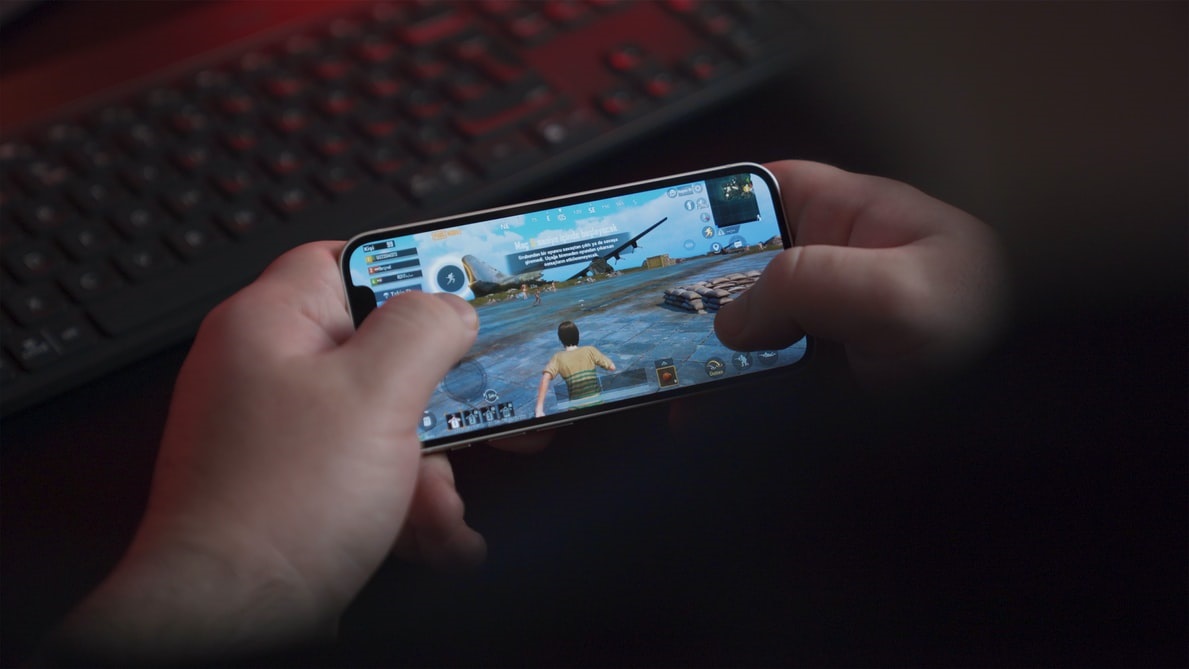
Can You Use a Budget Smartphone for Gaming?
While a budget smartphone won’t be able to take photographs that are as good as those produced by a flagship device, it will still be able to perform most other tasks without any issues.
The concern originates from the fact that gaming PCs are very different from general-purpose computers that are usually sold for web browsing and word processing. This means you won’t be able to play AAA titles like Call of Duty, Fortnite, or Cyberpunk 2077 on a low-end PC.
However, even these budget computers can still handle some games; you’ll have no trouble playing browser-based games, for example, and those thousands of other titles that don’t require cutting-edge hardware. Online casinos also run fine on lower-end computers and these sites usually have a diverse catalogue of content with everything from traditional table games to video slots like Bigg Bass Bonanza and Tom of Ra.
With smartphones, this is a little different. For the most part, if you bought a new handset in the last couple of years and you spent more than a couple of hundred dollars, you can be confident that it will handle any of the games on offer in either the Google Play or Apple App Stores.
Do You Get Inferior Graphics on Budget Smartphones?
While there is definitely some degradation in graphics quality between high-end and budget smartphones, the difference isn’t that big. If you’re not a hardcore gamer, then you might not even notice the difference.
Games like Call of Duty: Mobile do have graphics settings that can be turned up or down, depending on how powerful your smartphone is. Most players won’t need to touch this though as the game will run tests when it first loads up to decide the optimal setting for itself.
More powerful phones will be able to run games with the graphics turned up higher, but it won’t come close to the quality offered by current-gen consoles or gaming PCs.
Overall, budget smartphones can be used for gaming in almost all cases, so if you want a new handset but don’t want to splash out $1,000, don’t let gaming hold you back.